A couple weeks a ago we were assinged to look through Ceramic Monthlys to look for inspiration. While going through one i found ceramics artist Mark Leuthold. His collections have entered the collections of the Metropolitan and Brooklyn Museums and the Museum of Art and Design. His work reflects the influence of the arts of Asia, Africa, and the Mediterranean. He is also a Associate Professor at the State University of New York and has taught a
 t Princeton University and Parsons School of Design. The work that i looked at were his large porcelin slab wheels that he would carve into at the leather hard stage.
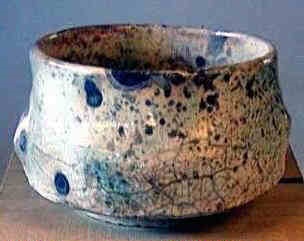
 My artwork is at the right, it is aproximatly 6 inches in diamter. It has gone through its first firing and awaiting its second. Here is shown with the unfired glaze on it, the color should come out to turquoise, i am hoping that it will melt into the cracks and show the detail i have carved into it. Like Mark, i carved into it during the leather hard stage. I started with thicker and straighter lines and then moved to much thinner, highly curved lines. To do the carving i used a razor blade and the needle tool. Below is a picture of it in its leather hard stage after i had completed the carving.


The pictures below are pictures of it after being glazed. I really like the color and they way it came out, filling in all the dips. I have made a stand and am waiting for that to be fired for the final time.